22 Jun The Single Vendor Advantage: Two Different Collections, Two Success Stories

When it comes time to sell-down a collection our vendors come to us with different motivations and most of them want to get as strong a return on their investment as possible (some may have time pressure that we understand and can accommodate).
Here are some common reasons for selling down a cellar:
– Moving to a smaller house without as much storage space, or overseas,
– Taking the time to stock take their collection and then realising that they either have more wine they could ever dream of drinking or a significant amount of wine that they no longer are interested in drinking (i.e. powerhouse Aussie reds were extremely popular 15 years ago while today lighter, more elegant wines are more fashionable),
– Inheriting wine from a family member that has passed,
– Wanting to finance renovations or travel, and
– Restaurants/retailers wanting to free up capital to reinvest.
We are always happy to take consignments of any size, and when it comes to larger consignments (especially if they go deep on one or two beloved styles or genres) consolidating them into a planned, well executed single vendor auction (or auction series) is a great way to generate strong returns.
The biggest appeal of a single vendor auction is that buyers are drawn to the story behind the collection. With the vendor’s permission, we can share details about how the wines were acquired, stored, and enjoyed over the years. This added provenance builds buyer confidence and creates a deeper connection to the wines, transforming a collection of bottles into something far more personal and memorable.
For specialised cellars the biggest advantage is marketing. While we customise marketing for every auction, featuring in-demand wines regardless of price, a single vendor auction allows our marketing team to focus on the most likely buyers. We advertise every auction throughout New Zealand and, depending on the selection of wines on offer, we also actively market in Australia, Hong Kong, Singapore, Japan and beyond. This level of targeted exposure is often essential for attracting the right buyers for highly prized wines, particularly Grand Cru Burgundy from the world’s most sought-after producers.

A key part of our approach is ensuring that too much of the same wine doesn’t reach the market at the same time, helping to protect prices and vendor returns.
Ultimately, we are committed to getting the highest vendor return possible and we take this commitment very seriously. Often this means starting with a higher reserve than some of our competition. We had one example of this last week where we noticed that a wine that featured in one of our single vendor auctions was also available in a competing auction. Our opening bid for the wine was $50, where the competitors was $28, 44% less than our own.
Starting at a higher reserve can sometimes mean the wine is passed in (i.e. has no bids). While this can be concerning for a vendor, it is not necessarily a sign that the wine won’t sell, or that buyers are unwilling to compete for it at the right price. Take the example of a 2013 Domaine Armand Rousseau Chambertin that has been featured in three recent auctions; when it finally sold, it went under the hammer for $2950, almost 15% above reserve with bids from six interested parties, including international bidders. For context we estimate this wine was initially purchased for around $1200, meaning it generated an annual return of about 8.5% per year (over 11 years).
Case Study 1: The Curated Collector
The Curated Collector was a relatively small single vendor auction for us with 290 bottles split between 113 lots and reserves between $30 and $250 per bottle. These wines came to us from an in-trade vendor / collector who worked with a range of private clients and was exiting the industry.

This auction featured a “who’s who” of top NZ producers and vintages. It included wines from Te Mata, Dry River, Felton Road, Craggy Range and Ata Rangi. A particular highlight was a large collection of cult Martinborough Pinot Noir, Devotus, a wine which rarely comes up at auction. The auction was rounded out by a small selection of Cru Classé Bordeaux with reserves between $100 and $200.
Given the relatively accessible price point of these wines, we actively marketed these selections exclusively in New Zealand. International freight costs can be significant, which ironically often prices overseas buyers out of more affordable wines. We also had social media posts shared by a number of producers, helping to boost the signal and reach potential new bidders. There was fierce bidding for some lots right up to the hammer.

As a result, we were able to get a 88% sell-through rate with a return to the vendor 14% above reserve. 77% of lots sold for above low estimate, with 22% exceeding their high estimate, delivering a strong return for the vendor and reinforcing the depth of buyer demand . The remaining 13 lots have been entered into other upcoming auctions and we anticipate further strong results.
Case Study 2: Burgundy and Beyond
In the case of Burgundy and Beyond, we were entrusted with what our Managing Director, Reece Warren, described as one of the most impressive cellars he has encountered. The collection was being offered by the family of a loved one who had passed.
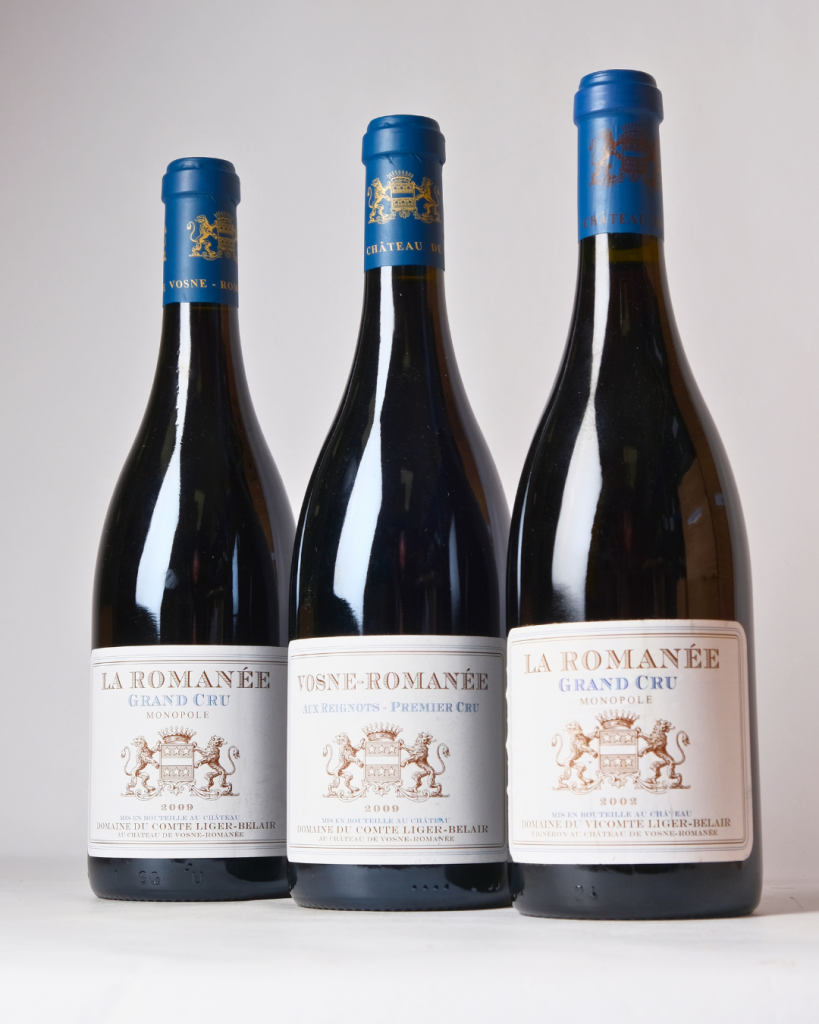
This cellar was centered around the great wines of Burgundy featuring many highly allocated and highly prized wines. Producers included Domaine de la Romanee Conti, Domaine Liger Comte-Belair, Domaine Armand Rousseau, Domaine J.F. Mugnier and Domaine Roumier with well over 35 other producers represented. Burgundian wines accounted for 75% of the cellar. The scarcity of these iconic wines is part of their appeal. With production limited and allocations tightly held, opportunities to acquire them can be few and far between.
We have processed and offered more than 900 bottles across 600+ lots, with more in the collection yet to come to the auction block. Of those offered,32% had reserves between $500 and $1500 per bottle with a further 9% having reserves over $1500. This includes some incredibly rare large format bottles with reserves over $10,000 per bottle.
As well as Burgundy there were also highly valued wines from other regions ranging from Martinborough’s Kusuda Pinot Noir through to first growth Bordeaux and some incredibly rare Champagne from Krug, Salon and Jacques Selosse.
With such a tightly focused collection, the auction required a different strategy to one designed for a broader cellar like The Curated Collector. Since early February we have offered curated collections of these wines in a series of auctions, with one more planned in Early July. Rather than releasing the entire collection at once, we limited each auction to around 275 lots. We believe size matters. Keeping auctions focused helps prevent buyer fatigue, allows individual wines to receive the attention they deserve, and keeps each catalogue fresh and engaging. While some auction houses favour larger catalogues, our approach is guided by what we believe delivers the best outcome for both vendors and buyers.

We have invested heavily in marketing these internationally including in Australia, Hong Kong and Singapore, attracting a number of international buyers. The campaign for these auctions received significant attention, so much so that one of our competitors ran their own ‘Burgundy and Beyond’ auction. As they say, imitation is the sincerest form of flattery.
As mentioned earlier, some wines were offered across multiple auctions, and where appropriate included in our wider calendar, including our headline live auctions. To further encourage participation at the top end of the catalogue , we reduced the buyers premium on the single vendor auctions to 12.5% which certainly motivated some buyers.
To date, the collection has achieved a 70% sell-through rate, with strong results overall and 9% of lots selling above their high estimate. So far we have been able to return over a quarter of a million dollars to our vendor. As the 2013 Rousseau Chambertin illustrates, many of these wines were purchased well before the market reached today’s levels, enabling some bottles to deliver remarkable long-term returns.
Conclusion:
A great collection deserves more than a place in a catalogue. If you’re considering selling, talk to us about a single vendor auction and how we can help tell the story of your cellar, connect with passionate buyers, and unlock the value you’ve spent years creating.
Single vendor auctions can also make financial sense. Because we are working with a single collection rather than coordinating wines from dozens of vendors, there are often efficiencies in our process. In some cases, these efficiencies allow us to offer a reduced seller’s premium, further improving the net return to the vendor.
Finally, it should be noted that both of these auctions contained some extremely appealing wine, many of which sat in a real sweet-spot in terms of age: mature enough to be increasingly difficult to source through traditional channels, yet recent enough, and backed by strong provenance, to offer buyers a high degree of confidence.
If you maintain a larger cellar and may one day choose to sell part or all of it, it is worth thinking about timing well in advance. In our experience, the strongest results are often achieved when wines are brought to market at, or approaching, their peak drinking window. While exceptional prices can certainly be achieved for very old wines, outcomes become less predictable as age increases. Buyers naturally take on more risk around condition and longevity, which can narrow the pool of potential purchasers and, in some cases, affect realised prices.
So, if you’re considering selling a larger cellar, don’t leave the outcome to chance. Contact our team for a confidential appraisal and let us show you how a carefully planned single vendor auction can maximise exposure, attract the right buyers, and deliver the strongest possible result.