

20 Aug Special Market Report: NZ Pinot Noir in 2026

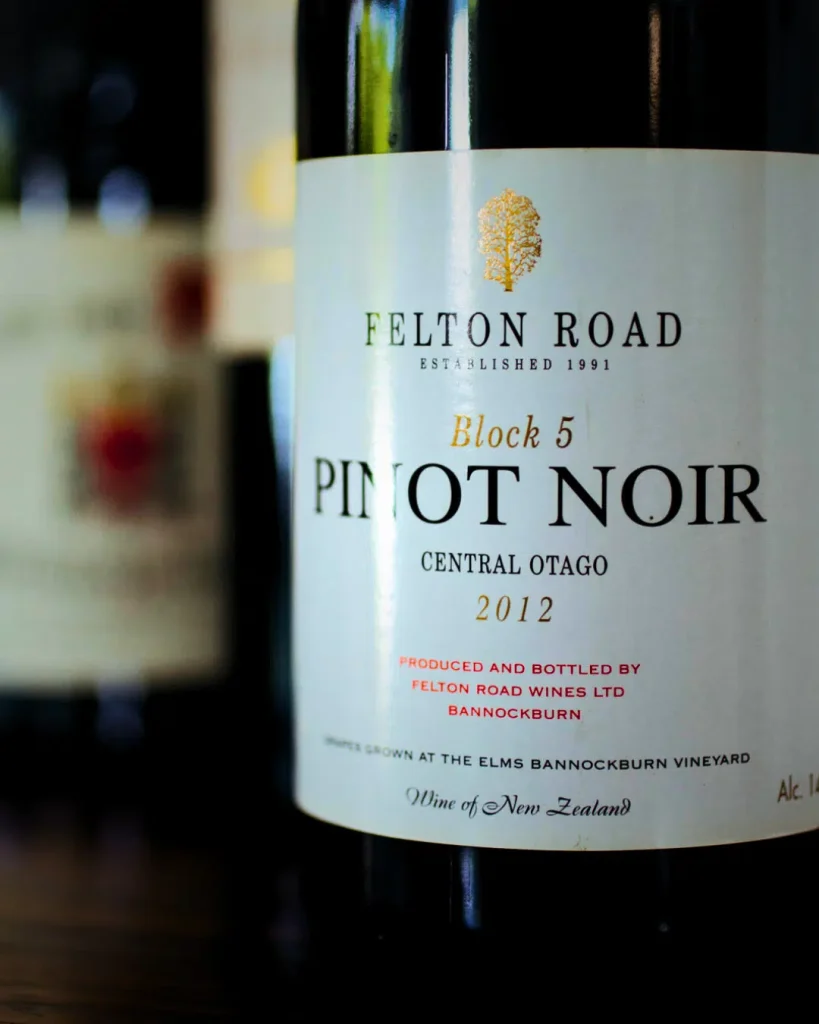
Photo courtesy of Wine Folio (winefolio.co.nz)
In August 2025 we published our first special market report looking at how secondary market pricing for New Zealand Pinot Noir had evolved over the past five years. This was undoubtedly our most popular article of the year and still attracts a significant amount of traffic. In light of this, and to celebrate International Pinot Noir Day which falls this week, we thought we’d have a look at how the category had evolved in the past 12 months.
Since last years report our very top 750ml equivalent sales* have barely changed and remain as follows:
1) 3x 2019 Kusuda Pinot Noir selling at $611.00 per bottle in October 2022,
2) 2x 2016 Bell Hill Pinot Noir selling at $434.75 per bottle in October 2022, and
3) A five way tie with multiple lots selling at $411.25 per bottle including two lots of 3x 2017 Felton Road Block 5 Pinot Noir (October 2021), 2x 2006 Bell Hill Pinot Noir (June 2025)**, 2x 2019 Kusuda Pinot Noir (October 2024), and 1x 2006 Bell Hill Pinot Noir (Sept 2025)**.
* Our very highest-selling NZ Pinot Noir lot was a 3l of 2018 Felton Road Block 3 Pinot Noir which sold for $2,408.75 in October 2021.
** These were also our overall top NZ Pinot Noir sales in 2025.
Sales and Average Prices Over Time (750ml equivalent):
| Year | Lots Sold: | Bottles Sold: | Average Price: |
| 2020 | 204 | 345 | $56.41 |
| 2021 | 316 | 660 | $82.83 |
| 2022 | 307 | 678 | $103.33 |
| 2023 | 300 | 546 | $79.93 |
| 2024 | 292 | 552 | $86.68 |
| 2025 | 410 | 672 | $109.20 |
| 2026 Q1+Q2 | $89.44* |
* Please note, this figure is indicative at best and is likely to change significantly. For example, at the same time last year the average 2025 price was $88.68 which has since jumped 23%.
Not only have our volumes of Pinot Noir sales increased by about 20% since 2024, but both volumes and the average 750ml bottle prices have eclipsed those achieved at the height of the market in late 2022 which, broadly reflecting wider trends we are seeing in international markets. In short we are seeing more wines sell for higher prices more frequently.
This said, with the exception of one wine, Bell Hill Pinot Noir, the average price we’ve achieved for our top sellers is still slightly lower than what we saw at the height of the market.
Average Price by Year for our 3 most traded producers in 2025 (four wines)
| Year | Felton B5 | Felton B3 | Bell Hill | Ata Rangi |
| 2021 | $250.88 | $184.64 | $211.5 | $112.16 |
| 2022 | $196.81 | $186.04 | $293.75 | $147.80 |
| 2023 | $198.96 | $160.09 | $242.83 | $118.34 |
| 2024 | $193.88 | $195.05 | $282.00 | $111.89 |
| 2025 | $181.47 | $173.08 | $356.90 | $105.38 |
Likewise, if we look at wines at the very top end, over the last year we’ve had four regularly traded NZ Pinot Noir wines sell at $200 or more:
Bell Hill Pinot Noir
Kusuda Pinot Noir (averaging around $276.13 per bottle in 2025)
Felton Road Block 5 Pinot Noir
Felton Road Block 3 Pinot Noir
We also had a sale of 2003 Rippon Pinot Noir at $223.25, but this is our only sale for this specific, now discontinued bottling. Likewise, Ata Rangi Pinot Noir is the only wine on this list that is not, effectively, allocation-only and while recent vintages only sell slightly above current retail ($90), there is strong competition for older vintages and large format bottles (see below). We also had a large allocation of Felton Road wines in late 2025 which featured in our first annual Pinot Envy Auction which more than doubled supply of these wines in our Auctions compared to the previous two years.
Sales by Wine (over time)
It is also interesting to see how the wines we sell have changed over time. The volume of sales (rather than price achieved) with this being more influenced by supply rather than demand.
Our top 10 most traded NZ Pinot Noir of all time are as follows (with their ranking over the last 12 months in brackets):
1) Dry River Pinot Noir (25th)
2) Ata Rangi Pinot Noir (5th)
3) Felton Road Block 5 (1st)
4) Felton Road Block 3 (2nd)
5) Two Paddocks The Last Chance Reserve (11th)
6) Valli Gibbston (20th)
7) Pyramid Valley Earth Smoke (12th=)
8) Craggy Range Aroha (9th=)
9) Felton Road Bannockburn (6th)
10) Pyramid Valley Angel Flower (12th=)
Other wines that would be included in a top ten over the last 12 months are as follows:
Devotus Reserve (3rd)
Bell Hill (4th)
Felton Road Calvert (7th)
Felton Road Cornish Point (9th=)
Devotus Estate (8th)

Two Martinborough neighbours (Devouts and Dry River) are interesting case studies. Devotus is a relatively new producer who have just released (and sold out of) their 11th vintage. Their Reserve and Estate wines were the 3rd and 8th most traded wines in the past 12 months. Dry River on the other hand is an established producer who will be celebrating their 40th vintage next year, and is our most frequently traded NZ Pinot Noir of all time however in the last year have dropped to the very middle of the very middle of the pack (25th). This says, it continues to maintain strong prices, well above retail.
Sales by Producer:
There are also a handful of producers for whom we see strong sales overall, spread between many wines. Valli are the best example of this and are our 5th best selling producer in the past 12 months (after Felton Road, Devotus, Ata Rangi and Bell Hill). That said, because they have four wines with similar sales (bottlings for Gibbston, Bannockburn, Waitaki and Bendigo respectively), the individual wines sit in the middle of the pack. Prophet’s Rock, Pegasus Bay, Gibbston Valley, Rippon, Burn Cottage and Mount Difficulty all also fall into this category.
Sales by Region:
How does this break down by region? Over the past year we have had sales of New Zealand Pinot Noir from over 90 different producers and from all regions except for Northland, Auckland, Waiheke and Gisborne. The regional breakdown is as follows:
Central Otago 57%
Wairarapa 23%
Canterbury 12%
Marlborough 5%
North Otago 1%
Nelson 1%
Hawkes Bay 1%
Strongest Performers
If we look at all of the NZ Pinot Noir that traded at or above our high estimate in the past year (about 18% of sales) it is no surprise that those at the very top of the price pyramid like Felton Road, Bell Hill and Kusuda are overrepresented. This said there are also a growing number of producers who also make the list. There are three notable producers here, all with a very different story to tell.
Ata Rangi – While recent vintages only trade slightly over retail, Ata Rangi have seen some incredibly strong prices for large format bottles and for older vintages; for example in our 2025 December Live Auction, a magnum of the 2013 vintage sold for $587.50, almost twice our high estimate.
Burn Cottage – in the same auction, three vintages of a new wine (both in the market and to us at Wine Auction Room), the Sauvage Vineyard Pinot Noir from Burn Cottage’s new plantings in Bannockburn also achieved high prices selling between $152.50 and $176.25. For context, the current 2022 vintage retails at $80.
Valli – Strong vintages of wines from all four of Valli’s vineyard bottlings have traded well, especially since December 2025 seeing sales between $112 and $130 for wines which currently retail at $85.

Other producers who achieved especially strong prices over the last 12 months include (in alphabetical order) Amisfield, Cloudy Bay, Devotus, Dicey, Dry River, Fromm, Grasshopper Rock, Mount Difficulty, Mountford, Novum, Olssen’s of Bannockburn (now Terra Sancta), Pegasus Bay, Rippon and Two Paddocks.
Conclusions, Investment and Cellaring Advice:
Essentially our advice from last years’ report stands however we do have a few additional observations to make:
– While the top of the market is well established, the middle of the market is very dynamic. Breakout wines from new producers are not uncommon and producer led changes (i.e. change of winemaker) can move the market.
– With the exception of the top of the market, demand seems to be driven more by demand for specific wines (and / or vintages) than by demand for individual producers.
– The secondary market for New Zealand Pinot Noir is growing but is still emerging and both supply and demand are driven by the primary market. Put simply, if a coveted wine is hard to find at retail, there is more demand at auction. Likewise, if there is more supply in the primary market (either ex-winery or at retail) then there is also more supply and less demand in the secondary market which in turn puts negative pressure on prices.
Consignments are now open for our Q4 2026 auctions. If you’re considering selling, now is a good time to talk to us about your collection and the right auction strategy for your wines.
Note: unless specified all prices are for 750ml bottles and include buyers premium. Where we have displayed average prices for a wine, this includes sales of all vintages of this wine. Retail prices, where quoted come from The Real Review.